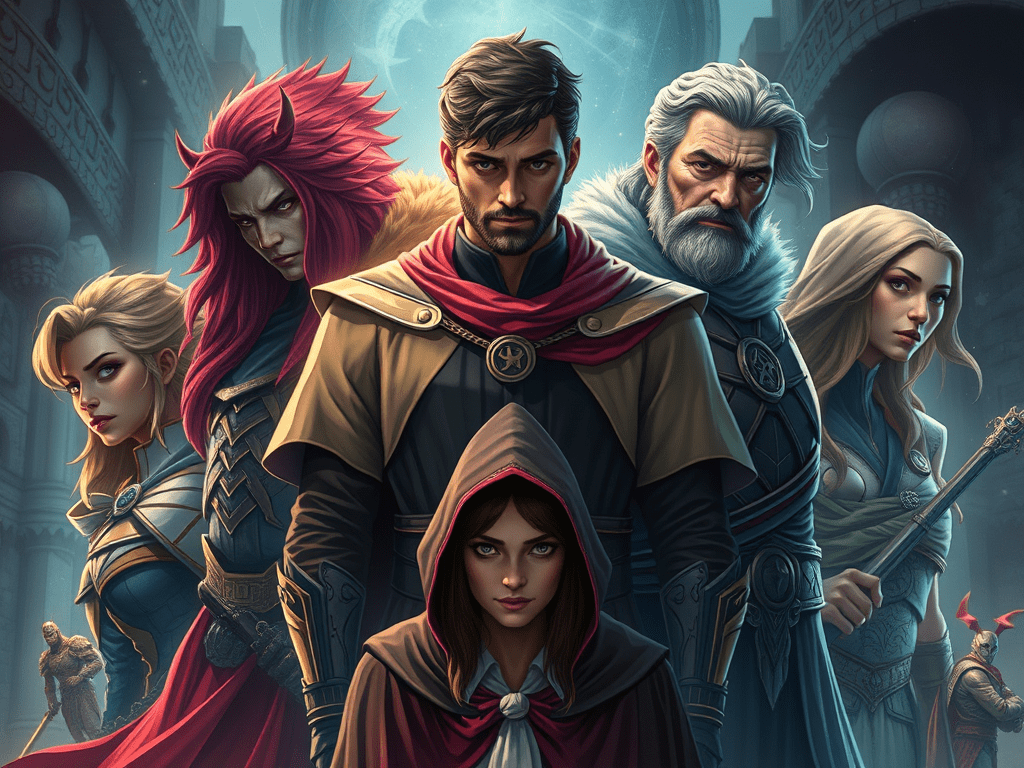
Today, we’ll be discussing archetypes in science fiction and fantasy. Specifically, as they apply to protagonists (main characters), antagonists (the bad guys) and secondary characters (sidekicks, love interests, companions, etc).
What is an archetype?
An archetype is like a blueprint for your characters. The “Hero” archetype is a pattern or mold that authors can use to build their main character around.

The blueprint can be used as a basis, a scaffolding to support your own ideas. They can be used to form a unique character that suits the story you’re building.
(Note that we are talking specifically about the hero as a character not the narrative structure of “The Hero’s Journey” which I’ll talk about at a later date).
Science Fiction and fantasy are built on the blueprint of one or more of several protagonist archetypes, such as:
The Chosen One – usually there’s a prophecy that needs fulfilling, a world to save, or a great evil to vanquish.
- Paul Atreides (Dune), Rand al’Thor (The Wheel of time), Frodo Baggins (The Lord of the Rings).
The Reluctant Hero – they start as an ordinary person who refuses the call and eventually grows into their heroism. They epitomise the fear of stepping outside ones comfort zone.
- Bilbo Baggins (The Hobbit)
The Anti-Hero – these characters often lake the morality and selfless nature of traditional heroes and challenge readers to explore morality and conventional thinking.
- Geralt of Rivia (The Witcher), Kelsier (Mistborn), Rick Deckard (Do Androids Dream of Electric Sheep?/BladeRunner), Aeduan (Bloodwitch)
The Tragic Hero – the protagonist destined for greatness only to be undone by a fatal flaw, bad decisions, or uncontrollable circumstances. These stories evoke empathy and explore themes of failure, loss, redemption and the consequences of one’s actions.
- Kaladin Stormblessed (The Stormlight Archive), Faris, Catrin and Lorettie (The Bastions of Khora – okay so this isn’t published yet, they are the main characters in a trilogy I’ve been working on for over a decade so they still count).
The Lost Soul/Outcast – These protagonists are alienated from society, because of their looks, their abilities, background, sexuality. Sometimes these characters are given a makeover and become accepted members of society, but the true power of The Outcast comes from self acceptance. Theirs is a journey of self discovery, and resonates with readers who feel like outsiders.
- Ender Wiggin (Ender’s Game), Gideon (Gideon The Ninth), Miss Peregrine’s Home for Peculiar Children
The Everyman – Mundane, normal person that finds themselves thrust into an extraordinary situation. This character represents the reader, we experience the strange world alongside the protagonist.
- Arthur Dent (The Hitchhikers Guide to the Galaxy), Bilbo Baggins (The Hobbit), Alice (Alice in Wonderland), Dorothy (The Wizard of Oz), Dr. Watson (Sherlock Holmes), Bella Swan (Twilight), Harry (Harry Potter), Charlie (Charlie and the Chocolate Factory)
The Warrior/Champion – Often driven by duty and honor, these characters are fighters and protectors in stories that are epitomized by violence and action. They rise to and overcome challenges. When all is lost, it is the warrior who rides over the hill and saves the day.
- King David (David & Goliath), Robin of Locksley (Robin Hood), Odysseus (The Odyssey), Breq/Justice of Toren/One Esk Nineteen (Ancillary Justice), Murderbot (The Murderbot Diaries), Aragorn (The Lord of the Rings)
The Visionary/Idealist – driven by a dream of better future, the visionary faces off against a world resistant to change.
- Katniss Everdeen (The Hunger Games), Morpheus (The Matrix), Aang (Avatar: The Last Airbender), Willy Wonka (Charlie and the Chocolate Factory), Jesus (The Bible)
The Rogue/Scoundrel – who doesn’t love a morally grey hero? The rogue/scoundrel relies on their wits and charisma to get out of a bind. They are resistant to stand up for a cause but in the end they often become the true believer. These characters are usually unpredictable, fun, and take nothing seriously (at least on the surface).
- Han Solo (Star Wars), Malcolm Reynolds (Firefly), Robin of Locksley (Robin Hood), Jimmy (Jimmy the Hand), Wesley & Inigo (The Princess Bride), Jack Sparrow (The Pirates of the Caribbean), James Bond (seriously, Bond isn’t a Warrior, he uses his wits and charisma first), Odysseus (The Odyssey – lick Bond he uses wits, charisma and cunning before violence), Puss (Puss In Boots), Mat (The Wheel of Time), Gambit (X-Men) (Here is a list of awesome books where Rogues take the lead).
The Scientist/Thinker – curiosity, intellect and the drive to discovery are trademarks of the scientist/thinker. These characters are driven by the pursuit of knowledge – wherever that may lead them.
- Dr. Frankenstein (Frankenstein), Penny Akk (Please, Don’t tell my parents I’m a Supervillain), Entire cast (Rendezvous with Rama), Mark Watney (The Martian), Elma York (The Calculating Stars)
The Reformed Villain – often haunted by their past, the reformed villain strives for redemption. These stories explore morality and transformation, with strong character arcs and emotional upheavals.
- Prince Zuko (Avatar: The Last Airbender), Missy (Doctor Who), Black Widow (The Avengers), Edmund (The Lion The Witch & the Wardrobe), Aeduan (Bloodwitch), Princess Luna/Nightmare Moon (My Little Pony),
The Survivor – against extreme odds, this hero vows to survive! This hero must navigate a hostile environment using nothing but their grit, ingenuity and a huge survival instinct. That need to survive is usually driven by a a higher purpose.
- Katniss Everdeen (The Hunger Games), Mark Whitney (The Martian), Furiosa (Mad Max: Fury Road), Odysseus (The Odyssey), Ishmael (Moby Dick), Mau and Daphne (Nation), Conan (Conan The Barbarian), Ahalya & Sita Ghai (A Walk Across the Sun)
It’s important to note that many protagonists encapsulate more than one of these archetypes. Arthur Dent is both a Reluctant Hero and an Everyman. Robin Hood is both a Rogue and a Champion, Katniss Everdeen is a Survivor and an Idealist. Like real life people, your characters should be more than one thing.
Pairing protagonists and secondary characters
We are all hero’s of our own stories. Never forget this. When creating your secondary characters, such as love interests, side kicks, crew mates, etc, it’s important to see them as their own leading man/lady. The character of Jimmy the Hand, was a secondary character in earlier novels by Raymond E. Fesit. He was a lovable pickpocket, thief and leader of the street gang The Mockers. Later Feist wrote a novel featuring Jimmy as the lead character, allowing readers a deeper look into his early life and how he became a hero at the end.
As a secondary character, Jimmy was the polar opposite of the leads, two princes who had grown up with all the privilege that entailed. Jimmy was a street rat that had nothing handed to him and every day was a fight for survival. He was the “foil” – accentuating the qualities, values and characteristics of the protagonists.
These secondary characters allow the writer to explore alternative solutions to a problems. Take Huck Finn and Tom Sawyer from The Adventures of Huckleberry Finn for example. Huck is guided by his morals where as Tom is driven by his love for adventure. Dr. Frankenstein is an obsessive recluse where as his creation craves connection and community. This leads the characters along paths they would otherwise ignore.
An antagonist can also be used as a foil, someone who is in direct opposition to the protagonist.
Pairing protagonists and antagonists/secondary characters
What I said about secondary characters being the heroes of their own stories holds true for your antagonist as well. The majority, if not all villains believe they are the true hero. They believe that what they are doing, is for a greater purpose. Think about Thanos in The Avengers: Infinity War/Endgame. He truly believed that the universe was in danger from over population. He thought that by removing 50% of the population he would ultimately save the universe. The protagonists didn’t disagree with his premise, they just disagreed with his solution this pitching them in a fierce battle of good vs evil.
Creating an antagonist that is diametrically opposed to the hero, creates a story with a compelling dynamic. Conflict is the heart of any story. If their is no adversity for the protagonist to overcome, there is no story.
In The Lord of The Rings, Frodo wants to destroy the ring, while Sauron wants it back so he can use it. In The Martian, Mark is pitted against an uncompromising environment that doesn’t care if he lives, dies or exists at all, in contrast Mark very much wants to survive and ultimately get off the planet.
Secondary characters and antagonists help create conflict, push the protagonist outside their comfort zone, amplify the stakes, provide alternate paths, highlight the protagonists values and gives them a reason to strive onward. It can be the force behind the protagonists personal growth, their means of overcoming their own shortcomings/faults.
The differences in between your protagonist and other characters is what will force your protagonist to grow and change, to fight for what they believe in while also adding depth to your story.

 Tracey Lee Writes
Leave a comment